Bike Size by Height and Inseam: Reading Brand Charts
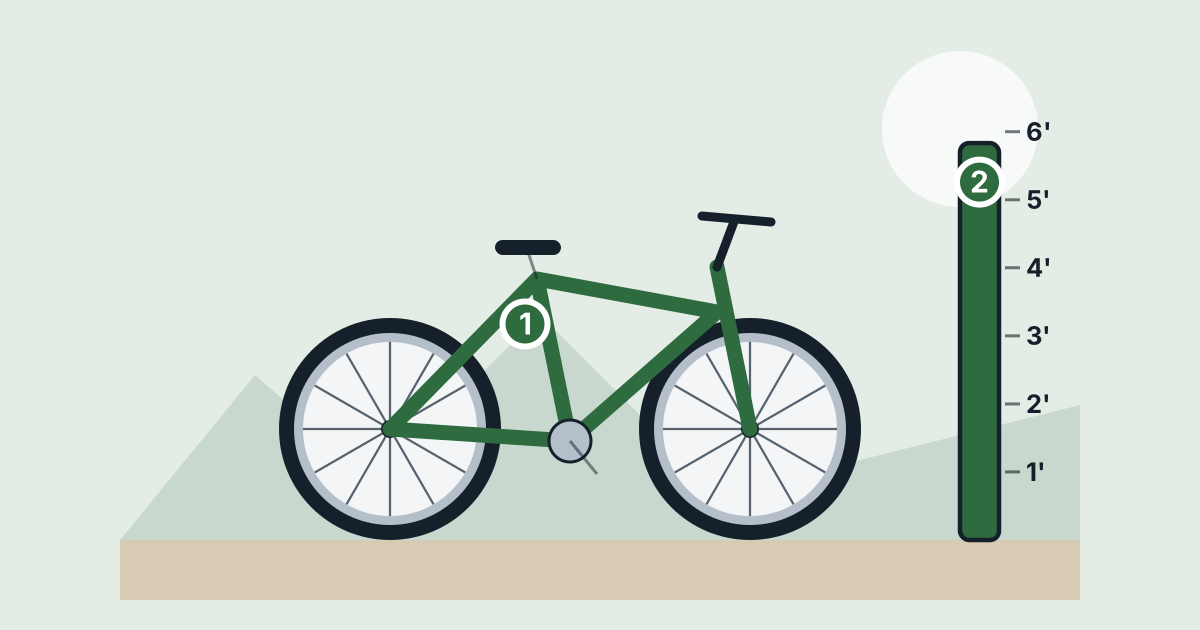
Bike brands print a rider-height span for each frame size, and the spans touch: a 5 ft 10 in rider sits in M and L on the mountain-bike charts read here. Height gets you to one or two sizes; inseam and riding style decide between them.
How the charts are built
Each chart lists a size letter (or, for drop-bar bikes, a number) and the heights it fits. Specialized's Fuse, for example:
| Size | Height | cm |
|---|---|---|
| XS | 4'10"–5'1" | 148–155 |
| S | 5'2"–5'5" | 158–165 |
| M | 5'5"–5'10" | 165–178 |
| L | 5'10"–6'1" | 178–185 |
| XL | 6'1"–6'4" | 185–193 |
Where one size ends at the same height the next begins, a rider at that height fits both.
Worked examples
- 5 ft 10 in: Specialized Fuse M/L, Specialized Chisel M/L, Santa Cruz 5010 L, Norco Range L. Hybrid (Crossroads): L. See 5 ft 10 in.
- 5 ft 5 in: Specialized Fuse S/M, Specialized Chisel S/M, Santa Cruz 5010 S/M, Norco Range S/M.
Settling a between-sizes call
Cannondale's method uses inseam: "Measure your inseam with your legs 8-10 inches apart and subtract 1-2 inches for crotch clearance." Compare that with the stand-over height in a model's geometry chart and keep 1 to 2 inches of clearance. Long legs for your height point to the larger frame; a long torso and short legs to the smaller one.
Every height is on the bike size pages; the profile tool sizes a bike with your other gear.
Sources
- Specialized Fuse fit chart, checked 2026-10-20
- Specialized Crossroads fit chart, checked 2026-10-20
- Specialized Chisel size chart (published by evo), checked 2026-10-20
- Specialized Diverge size chart (published by evo), checked 2026-10-20
- Santa Cruz 5010 size chart (published by evo), checked 2026-10-20
- Norco Range size chart (published by evo), checked 2026-10-20
- What size road bike do I need?, checked 2026-10-20
Questions
Why does my height fit two bike sizes?
Brand charts let one size's height span end where the next begins, so a rider at the edge fits both. Inseam and riding style settle it.
How much stand-over clearance do I need?
Cannondale gives a small clearance between your body and the top tube; the figure is in the section on settling a between-sizes call.